Belmont Metals, Inc. HOLTITE #1068 BRAZING ALLOY TYPE SS 4505F

Description
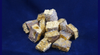
Brazing Alloys Featuring Holtite Alloys and Miter-Al-Braze Alloys for Aluminum Metal Joining Brazing is a metal joining process whereby a filler metal is heated above the melting point and distributed between two or more close fitting parts by capillary action. The filler metal is brought slightly above its melting ( liquidus ) temperature while protected by a suitable atmosphere, usually a flux. It then flows over the base metal ( know as wetting ) and is then cooled to join the workpieces together. It is similar to soldering, except the temperatures used to melt the filler metal are higher for brazing. A variety of alloys are used as filler metals for brazing depending on the intended use or application method. In general, braze alloys are made up of 3 or more metals to form an alloy with the desired properties. The filler metal for a particular application is chosen based on its ability to: wet the base metals, withstand the service conditions required, and melt at a lower temperature than the base metals or at a very specific temperature. Applications: Joining material within the Aluminum family of alloys. Forms: Cast Strips or Powder, special shapes available upon request.

Suppliers

Company
Product
Description
Supplier Links
HOLTITE #1068 BRAZING ALLOY TYPE SS - 4505F - Belmont Metals, Inc.
Brooklyn, NY, USA
HOLTITE #1068 BRAZING ALLOY TYPE SS
4505F
HOLTITE #1068 BRAZING ALLOY TYPE SS 4505F
Brazing Alloys Featuring Holtite Alloys and Miter-Al-Braze Alloys for Aluminum Metal Joining Brazing is a metal joining process whereby a filler metal is heated above the melting point and distributed between two or more close fitting parts by capillary action. The filler metal is brought slightly above its melting ( liquidus ) temperature while protected by a suitable atmosphere, usually a flux. It then flows over the base metal ( know as wetting ) and is then cooled to join the workpieces together. It is similar to soldering, except the temperatures used to melt the filler metal are higher for brazing. A variety of alloys are used as filler metals for brazing depending on the intended use or application method. In general, braze alloys are made up of 3 or more metals to form an alloy with the desired properties. The filler metal for a particular application is chosen based on its ability to: wet the base metals, withstand the service conditions required, and melt at a lower temperature than the base metals or at a very specific temperature. Applications: Joining material within the Aluminum family of alloys. Forms: Cast Strips or Powder, special shapes available upon request.

Brazing Alloys

Featuring Holtite Alloys and Miter-Al-Braze Alloys for Aluminum Metal Joining

Brazing is a metal joining process whereby a filler metal is heated above the melting point and distributed between two or more close fitting parts by capillary action. The filler metal is brought slightly above its melting ( liquidus ) temperature while protected by a suitable atmosphere, usually a flux. It then flows over the base metal ( know as wetting ) and is then cooled to join the workpieces together. It is similar to soldering, except the temperatures used to melt the filler metal are higher for brazing.

A variety of alloys are used as filler metals for brazing depending on the intended use or application method. In general, braze alloys are made up of 3 or more metals to form an alloy with the desired properties. The filler metal for a particular application is chosen based on its ability to: wet the base metals, withstand the service conditions required, and melt at a lower temperature than the base metals or at a very specific temperature.

Applications:

Joining material within the Aluminum family of alloys.

Forms:

Cast Strips or Powder, special shapes available upon request.

Supplier's Site

Technical Specifications

  Belmont Metals, Inc.
Product Category Filler Alloys and Consumables
Product Number 4505F
Product Name HOLTITE #1068 BRAZING ALLOY TYPE SS
Applications / Materials Joined Aluminum
Unlock Full Specs
to access all available technical data

Similar Products

Solder - 8007642 - RS Components, Ltd.
RS Components, Ltd.
Specs
Joining Process / Product Form Solid wire or rod; Wire
Diameter / Thickness 0.0398 inch (1.01 mm)
Solder Alloy Tin-Lead Alloy Solder (SN-Pb); Tin-Silver Alloy Solder (Sn-Ag)
View Details
Solder Thermal Interface Materials (TIMs) for High Performance - Kester ® Indium sTIM - MacDermid Alpha Electronics Solutions
Specs
Solder Alloy Indium Alloy Solders
View Details
Welding Consumable - Flux-Cored Wires - Self-Shielded - Innershield®  NR-305 - Lincoln Electric Co. (The)
Specs
Applications / Materials Joined Mild Steel for General Plate Fabrication, Structural Fabrication, Including Those Subject to Seismic Requirements, Shipyards
Joining Process / Product Form Flux Cored Wire
Diameter / Thickness 0.0781 to 0.0938 inch (1.98 to 2.38 mm)
View Details