Beckhoff Automation LLC EK1501 | EtherCAT Coupler with ID switch, multi-mode fiber optic

Description
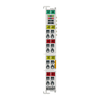
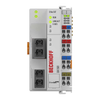
The EK1501 EtherCAT Coupler with multi-mode fiber-optic connection is the link between the EtherCAT protocol at fieldbus level and the EtherCAT Terminals. The coupler converts the passing telegrams from Ethernet 100BASE-FX to E-bus signal representation. A station consists of a coupler and any number of EtherCAT Terminals that are automatically detected and individually displayed in the process image. Special features: connection technology 2 x multi-mode fiber-optic connection via SC duplex connection lengths up to 2 km 3 ID switches for implementing variable topologies number of EtherCAT Terminals in the overall system: up to 65,535 The EK1501 has two SC duplex sockets and three hexadecimal ID switches. The coupler is connected to the network via the upper Ethernet connection. The lower SC duplex socket may be used to connect further EtherCAT devices in the same segment. The multi-mode glass fiber connection enables distances of up to 2 km between two couplers. A group of EtherCAT components can be assigned a unique ID via the hexadecimal ID switches. This group can then be located at any position within the EtherCAT network. Variable topologies are therefore easily implementable. In addition, an EtherCAT junction or an EtherCAT extension can be used for the extension or for setting up a line or star topology. The system and field supply, each 24 V DC, is provided directly at the coupler. The attached EtherCAT Terminals are supplied with the current required for communication from the supplied system voltage. The coupler can supply a maximum of 5 V and 2 A. Power feed terminals (e.g. EL9410) must be integrated if more current is required. The field supply is forwarded to the individual I/O components via the power contacts with up to 10 A.
Request a Quote
Description
The EK1501 EtherCAT Coupler with multi-mode fiber-optic connection is the link between the EtherCAT protocol at fieldbus level and the EtherCAT Terminals. The coupler converts the passing telegrams from Ethernet 100BASE-FX to E-bus signal representation. A station consists of a coupler and any number of EtherCAT Terminals that are automatically detected and individually displayed in the process image. Special features: connection technology 2 x multi-mode fiber-optic connection via SC duplex connection lengths up to 2 km 3 ID switches for implementing variable topologies number of EtherCAT Terminals in the overall system: up to 65,535 The EK1501 has two SC duplex sockets and three hexadecimal ID switches. The coupler is connected to the network via the upper Ethernet connection. The lower SC duplex socket may be used to connect further EtherCAT devices in the same segment. The multi-mode glass fiber connection enables distances of up to 2 km between two couplers. A group of EtherCAT components can be assigned a unique ID via the hexadecimal ID switches. This group can then be located at any position within the EtherCAT network. Variable topologies are therefore easily implementable. In addition, an EtherCAT junction or an EtherCAT extension can be used for the extension or for setting up a line or star topology. The system and field supply, each 24 V DC, is provided directly at the coupler. The attached EtherCAT Terminals are supplied with the current required for communication from the supplied system voltage. The coupler can supply a maximum of 5 V and 2 A. Power feed terminals (e.g. EL9410) must be integrated if more current is required. The field supply is forwarded to the individual I/O components via the power contacts with up to 10 A.
Request a Quote

Suppliers

Company
Product
Description
Supplier Links
EK1501 | EtherCAT Coupler with ID switch, multi-mode fiber optic -  - Beckhoff Automation LLC
Savage, MN, United States
EK1501 | EtherCAT Coupler with ID switch, multi-mode fiber optic
The EK1501 EtherCAT Coupler with multi-mode fiber-optic connection is the link between the EtherCAT protocol at fieldbus level and the EtherCAT Terminals. The coupler converts the passing telegrams from Ethernet 100BASE-FX to E-bus signal representation. A station consists of a coupler and any number of EtherCAT Terminals that are automatically detected and individually displayed in the process image. Special features: connection technology 2 x multi-mode fiber-optic connection via SC duplex connection lengths up to 2 km 3 ID switches for implementing variable topologies number of EtherCAT Terminals in the overall system: up to 65,535 The EK1501 has two SC duplex sockets and three hexadecimal ID switches. The coupler is connected to the network via the upper Ethernet connection. The lower SC duplex socket may be used to connect further EtherCAT devices in the same segment. The multi-mode glass fiber connection enables distances of up to 2 km between two couplers. A group of EtherCAT components can be assigned a unique ID via the hexadecimal ID switches. This group can then be located at any position within the EtherCAT network. Variable topologies are therefore easily implementable. In addition, an EtherCAT junction or an EtherCAT extension can be used for the extension or for setting up a line or star topology. The system and field supply, each 24 V DC, is provided directly at the coupler. The attached EtherCAT Terminals are supplied with the current required for communication from the supplied system voltage. The coupler can supply a maximum of 5 V and 2 A. Power feed terminals (e.g. EL9410) must be integrated if more current is required. The field supply is forwarded to the individual I/O components via the power contacts with up to 10 A.

The EK1501 EtherCAT Coupler with multi-mode fiber-optic connection is the link between the EtherCAT protocol at fieldbus level and the EtherCAT Terminals. The coupler converts the passing telegrams from Ethernet 100BASE-FX to E-bus signal representation. A station consists of a coupler and any number of EtherCAT Terminals that are automatically detected and individually displayed in the process image.

Special features:

  • connection technology 2 x multi-mode fiber-optic connection via SC duplex
  • connection lengths up to 2 km
  • 3 ID switches for implementing variable topologies
  • number of EtherCAT Terminals in the overall system: up to 65,535

The EK1501 has two SC duplex sockets and three hexadecimal ID switches. The coupler is connected to the network via the upper Ethernet connection. The lower SC duplex socket may be used to connect further EtherCAT devices in the same segment. The multi-mode glass fiber connection enables distances of up to 2 km between two couplers. A group of EtherCAT components can be assigned a unique ID via the hexadecimal ID switches. This group can then be located at any position within the EtherCAT network. Variable topologies are therefore easily implementable. In addition, an EtherCAT junction or an EtherCAT extension can be used for the extension or for setting up a line or star topology.

The system and field supply, each 24 V DC, is provided directly at the coupler. The attached EtherCAT Terminals are supplied with the current required for communication from the supplied system voltage. The coupler can supply a maximum of 5 V and 2 A. Power feed terminals (e.g. EL9410) must be integrated if more current is required. The field supply is forwarded to the individual I/O components via the power contacts with up to 10 A.

Supplier's Site

Technical Specifications

  Beckhoff Automation LLC
Product Category Data Acquisition
Product Name EK1501 | EtherCAT Coupler with ID switch, multi-mode fiber optic
Data Acquisition Input/Output Module
Unlock Full Specs
to access all available technical data

Similar Products