Plastic Machining Services
Service Detail from Pexco
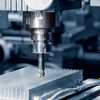


Pexco’s precision machining capabilities transform high-performance plastic materials into complex components with tight tolerances for aerospace, medical, semiconductor, and industrial applications. With over 40 CNC machines including 3-, 4-, and 5-axis mills, multi-axis mill-turns, and Swiss turning equipment, we machine components from micro-scale parts to 20-inch diameter turned components. Our temperature-controll
From prototype to production, our machining services complement our molding and extrusion capabilities to deliver complete manufacturing solutions including secondary operations, stress relieving, and advanced surface finishing techniques like vapor polishing for optical-clarity applications.
CNC MillingWe operate 3-, 4-, and 5-axis CNC milling equipment capable of producing complex geometries with tight tolerances from solid stock, castings, or molded components. Three-axis milling handles straightforward prismatic parts efficiently, while 4-axis capabilities add rotary indexing for features around cylindrical components. Five-axis simultaneous machining enables complex contoured surfaces and compound angles in a single setup, eliminating multiple repositioning operations.
Our temperature-controll
Our CNC turning capabilities range from micro-machining of miniature components to large-diameter parts up to 20 inches, utilizing multi-axis mill-turn equipment with sub-spindles and live tooling. With over 40 CNC turning and Swiss machining centers, we efficiently handle both prototype quantities and production volumes.
Key Capabilities
- Complete part production in a single setup incorporating turned features, cross-holes, slots, and complex geometries
- Multi-axis mill-turns with live tooling eliminate secondary operations
- Sub-spindles enable front and back machining without repositioning
Swiss Machining: Swiss-type CNC machines excel at producing small-diameter precision components with exceptional accuracy and surface finish. The Swiss turning process supports the workpiece very close to the cutting tool, minimizing deflection and enabling tight tolerances on slender parts that would be impractical with conventional turning. Particularly valuable for medical device components, connectors, and instrumentation parts requiring multiple features machined to close tolerances in a single operation.