Extrusion Services
Service Detail from Elasto Proxy Inc.


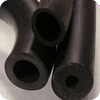
Elasto Proxy sources the right rubber materials for your applications, and then custom fabricates high-quality rubber extrusions that meet all of your requirements. Extruded and spliced gaskets that resist moisture, dust, and corrosion are just some of the industrial rubber products that Elasto Proxy supplies. Custom and specialized extruded parts include UL fire-rated bulb trims that meet strict requirements from Underwriters Laboratories (UL).
Elasto Proxy can also supply "green extrusions" that use recycled, recyclable, or biodegradable materials to help reduce your company's carbon footprint. As more and more environmentally-frie
Extrusion
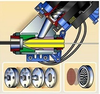
Extrusion produces sponge or solid profiles with a fixed cross-section. Rubber is pushed or drawn through a specialized metal tool called a die. As pressure from the extruder's screw forces the material through the die, the rubber compound may swell and increase in size. Consequently, steel dies are designed for specific extruders and particular compounds.
Compared to other manufacturing processes, extrusion offers several advantages. In addition to creating complex cross-sections, extrusion works with materials that are brittle. Extruded rubber profiles also have an excellent surface finish. Extrusions require curing, however, so that the rubber becomes more durable. Several different curing methods are used.
Curing
Extruded rubber is cured through vulcanization, a chemical conversion process that applies heat and adds sulfur or other curatives and additives. Vulcanization methods are either static or continuous, and typically involve hot air, an autoclave or microwave, or a salt tank.
Static vulcanization conveys the extrusion to a station where products are cut-to-length and then placed on a metal pan for autoclaving. Continuous vulcanization feeds the extrusion directly from the extruder to the vulcanizing equipment. Hot air, molten salts, oils, fluidized beads, and microwaving may be used. Continuous vulcanization has its advantages, but the lack of pressure makes porosity difficult to control.